She went upstairs, step by step, very slowly. When she came to the
bedroom door with the jugs and glasses on the table outside, she paused.
The sour-sweet smell of illness slightly sickened her. She could not force
herself to go in. Through the little window at the end of the passage she
could see flamingo-coloured curls of cloud lying on a pale-blue sky.
After the dusk of the drawing-room, her eyes dazzled. She seemed fixed
there for a moment by the light. Then on the floor above she heard
children's voices—Martin and Rose quarrelling.
"Don't then!" she heard Rose say. A door slammed. She paused. Then
she drew in a deep breath of air, looked once more at the fiery sky, and
tapped on the bedroom door.
The nurse rose quietly; put her finger to her lips, and left the room.
There were so many of them in the room that she could get no further than the
doorway. She could see two nurses standing with their backs to the wall
opposite. One of them was crying—the one, she observed, who had only
come that afternoon. She could not see the bed from where she stood.
But she could see that Morris had fallen on his knees. Ought I to kneel
too? she wondered. Not in the passage, she decided. She looked away;
she saw the little window at the end of the passage. Rain was falling;
there was a light somewhere that made the raindrops shine. One drop
after another slid down the pane; they slid and they paused; one drop
joined another drop and then they slid again. There was complete silence
in the bedroom.
Is this death? Delia asked herself. For a moment there seemed to be
something there. A wall of water seemed to gape apart; the two walls
held themselves apart. She listened. There was complete silence. Then
there was a stir, a shuffle of feet in the bedroom and out came her father,
stumbling.
"Rose!" he cried. "Rose! Rose!" He held his arms with the fists clenched
out in front of him.
You did that very well, Delia told him as he passed her. It was like a
scene in a play. She observed quite dispassionately that the raindrops
were still falling. One sliding met another and together in one drop they
rolled to the bottom of the window-pane.
from The Years, by V. Woolf
.
6.05.2013

5.28.2013
a visionary (i)
A bird falls from the sky
A field is there
for the single bird shot down when no one was around
A scream comes from a window
The world is there
for the single scream shot to death in a room with no one around
The sky is there for the small bird The small bird falls only from the sky
The window is there for the scream The scream is heard only from the window
I do not know why it is so
I only feel why it is so
For the small bird to fall, there has to be some height
There must be something that is shut tight
for the scream to be heard
Just as there is the small dead bird in the field, death fills my mind
Just as death occupies my mind, no one is at any window in the world
Ryuichi Tamura (tr. Takako Lento)
original
original
.
.
5.25.2013
nu
there are rooms that have no windows
so in the world of the heart there are windows with no rooms
you stand still, in silence
even if your heart, lost
before things took shape,
cries out from the window
my ears do not hear her voice
my eyes listen to her voice
Ryuichi Tamura, tr. Takako Lento
original
so in the world of the heart there are windows with no rooms
among the buzz of honey bees
torn things and the skin of a heart
sparkling rain on a summer’s day
and dead things
you stand still, in silence
even if your heart, lost
before things took shape,
cries out from the window
my ears do not hear her voice
my eyes listen to her voice
Ryuichi Tamura, tr. Takako Lento
original
5.24.2013
a gleam in the windows
If Elisabeth has time at the end of her studies, she could
read literature, but Rilke’s advice is ‘to look into the blue of the
hyacinths. And the spring!’ He gives her specific advice about her poems
and about translation; after all, ‘it is not the gardener who is
encouraging and caring who helps, but the one with the pruning-shears
and spade; the rebuke!’ He shares his emotions about what it is like to
have finished a great work. You feel a dangerous buoyancy, writes Rilke,
as if you could float away.
In these letters he becomes lyrical:
'I believe that in Vienna, when the dragging
wind is not cutting through you, you can sense the spring. Cities often
feel things in anticipation, a paleness in the light, an unexpected
softness in the shadows, a gleam in the windows – a slight feeling of
embarrassment of being a city…in my own experience only Paris and (in a
naïve way) Moscow absorb the whole nature of the spring into them as if
they were a landscape…'
And then he signs off: ‘Farewell to you for
now: I deeply appreciated the warmth and friendship of your letter. May
you keep well! Your true friend RM Rilke.’
Just think what it must have been like to
get that letter from him. Imagine seeing his slightly right-sloping and
looping handwriting on the envelope from Switzerland as the post is
brought into the breakfast-room in the Palais, your father at one end
opening the beige book-catalogues from Berlin, your mother at the other
with the feuilleton, your brother and sister arguing quietly. Imagine
slitting open the envelope and finding that Rilke has sent you one of
his ‘Sonnets to Orpheus’ and a transcription of a poem of Valéry. ‘It is
like a fairytale. I cannot believe it belongs to me,’ she writes back
that night from her desk pushed up against the window looking onto the
Ring.
They planned to meet. ‘Let it not be a short
hour, but a real moment of time,’ he writes, but they were unable to
meet each other in Vienna, and then Elisabeth got the time wrong for
their meeting in Paris and had to leave before he arrived. I find their
telegrams. Rilke at the Hôtel Lorius in Montreux, 11H 15 to Mademoiselle
Elisabeth Ephrussi, 3 rue Rabelais Paris (Réponse payée), and her response forty minutes later and his the next morning.
Then he was ill and couldn’t travel, and
there is a hiatus while Rilke is in the sanatorium where they are trying
to treat him; then a final letter a fortnight before his death.
from Edmund de Waal, The Hare with Amber Eyes, where he tells the story of the friendship between his grandmother, Elisabeth de Waal, baroness Ephrussi, and R. M. Rilke. I should have only selected that quote from his letter, but i found the entire story so touching that i posted most of it. you can find the book here
5.20.2013

5.18.2013

5.15.2013
5.14.2013

philosopher's window
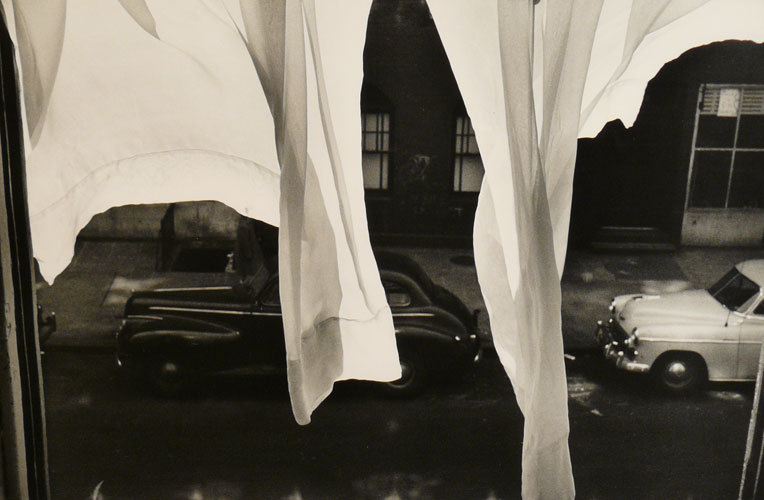
Hermine Wittgenstein tells of the bewilderment of the family over Ludwig’s determination, immediately upon his return home at the end of World War One, to rid himself unconditionally of his whole fortune; and of her own dismay at his decision to become a country schoolteacher. She protested to him that his teaching in an elementary school would be like ‘using a precision instrument to open crates’. She was silenced when he replied: ‘You remind me of someone who is looking through a closed window and cannot explain to himself the strange movements of a passer-by. He doesn’t know what kind of a storm is raging outside and that this person is perhaps only with great effort keeping himself on his feet.’
.
.
turning to myself after a long journey
I have brought it to my heart to be a still point
Of praise for the powers which move towards me as I
To them, through the dimensions a tree opens up,
Or a window, or a mirror. Creatures fell
Silent, then returned my stare.
Or a window, or a mirror. The shock of re-
Turning to myself after a long journey,
With music, has made me cry, cry out — angels
And history through the heart's attention grow transparent.
John Riley, Poem (for Rilke in Switzerland)
(courtesy of the Black Sun )
.
5.08.2013
as against everything
Silence emerges from the sound of rain and spreads in a crescendo of gray monotony over the narrow street I contemplate. I’m sleeping while awake, standing by the window, leaning against it as against everything. I search in myself for the sensations I feel before these falling threads of darkly luminous water that stand out from the grimy building facades and especially from the open windows. And I don’t know what I feel or what I want to feel. I don’t know what to think or where I am.
Fernando Pessoa, The Book of Disquiet
.
.
Fernando Pessoa, The Book of Disquiet
.
.
5.02.2013
Subscribe to:
Posts (Atom)